
Quick Answer
A basement that floods repeatedly can have three different sources: a plumbing failure (sewer backup reaching floor drains, broken pipe), a drainage failure (sump pump failure, overwhelmed sump, poor grading), or groundwater intrusion (hydrostatic pressure through walls or slab). Each source has a different fix. Identifying where the water first appears in the basement is the most important first observation.
Signs Your Basement Is Flooding
- Water on the basement floor after rain events
- Water appearing from floor drains
- Water seeping through walls or floor cracks
- Window well filling and overflowing
- Basement flooding with no rain (indicates plumbing leak or backup)
- Sewer odor with the flooding
Common Causes
Failed or Overwhelmed Sump Pump
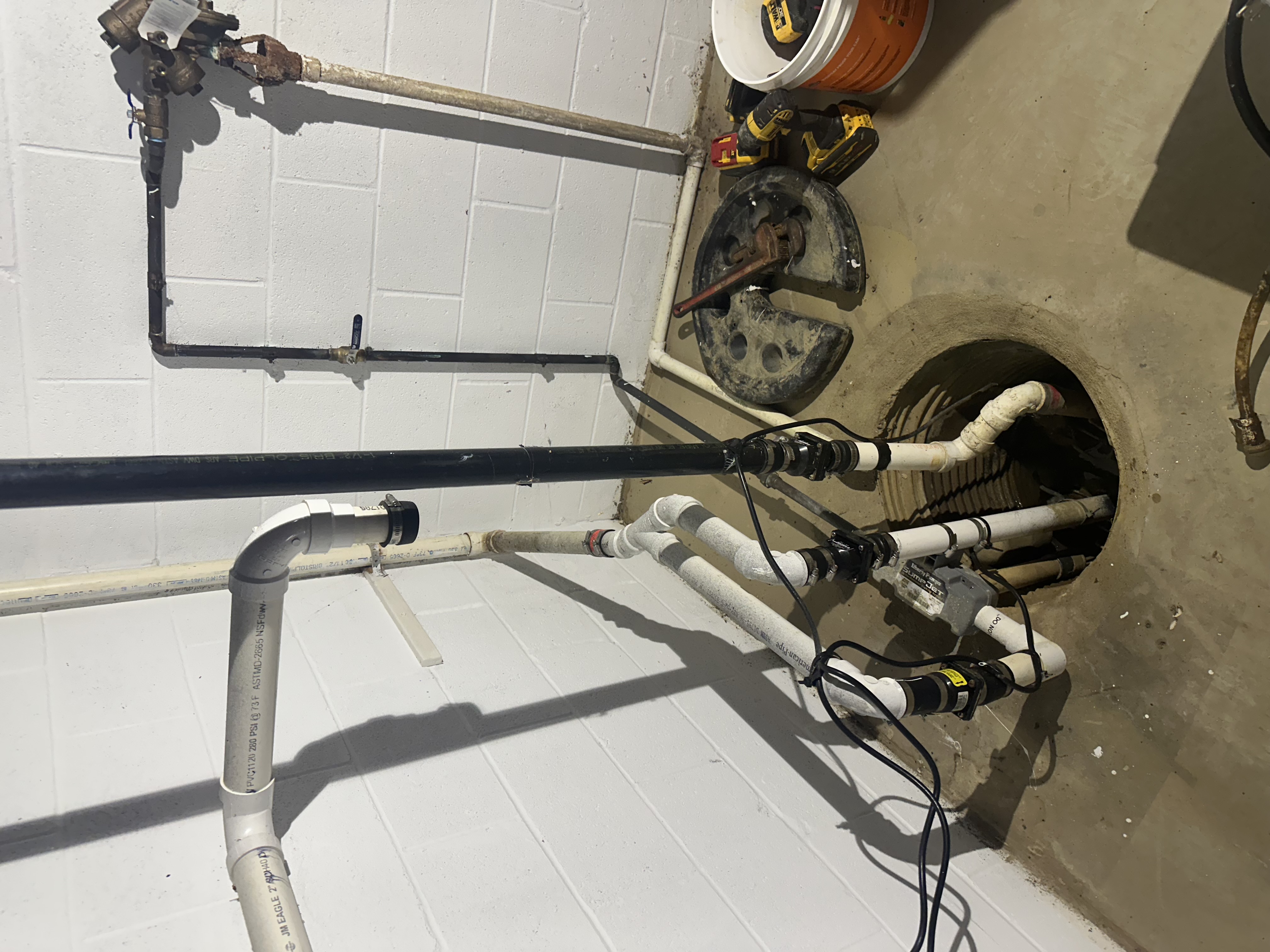
A sump pump that has failed, is undersized, or has a blocked discharge line cannot remove groundwater entering the pit. The pit overflows and water spreads across the basement floor. This is the most common plumbing-related cause of basement flooding in Northeast Ohio.
Sewer Backup Through Floor Drain
A main sewer line blockage causes wastewater to back up through the lowest drain opening in the home -- usually the basement floor drain. Water from a sewer backup has an odor and appears at the floor drain first. A backflow preventer prevents this from happening.
Hydrostatic Pressure Through Foundation
When the water table rises significantly after heavy rain or thaw, groundwater can push through porous concrete, foundation cracks, or the joint where the wall meets the floor. This water appears along the base of the walls or through floor cracks and has no odor.
Surface Water and Poor Grading
Downspouts discharging near the foundation, window wells that collect rain, or ground that slopes toward the home direct surface water toward the foundation. This type of flooding corresponds directly with rainfall and usually enters through windows, window wells, or cracks in the foundation wall.
Broken Pipe in or Under the Slab
A pipe failure beneath the concrete slab -- either a supply line or a buried drain line -- can cause water to accumulate below the slab and eventually surface through cracks. This flooding does not correlate with rainfall.
What Can Homeowners Safely Check?
- Note where water first appears: floor drain (sewer backup), wall base (hydrostatic), window well (surface water), floor crack (slab or hydrostatic).
- Note whether flooding correlates with rain or with plumbing use.
- Check if the sump pump is running and whether the pit is overflowing.
- Note whether the water has a sewage odor (sewer backup) or is clear (groundwater or surface water).
- Check window wells for debris accumulation and whether they have covers.
Safety: Do not enter a flooded basement if water may have contacted electrical equipment. Shut off power at the main panel if in doubt.
When Is This an Emergency?
- Sewage backing up with flooding
- Water rising rapidly and electrical equipment is at risk
- Flooding is reaching HVAC equipment, hot water heater, or electrical panel
Solutions by Cause
Sump Pump Issue:
Pump replacement or upgrade, battery backup installation, discharge line repair or rerouting.
Sewer Backup:
Sewer line clearing and camera inspection, backflow preventer installation on floor drain.
Hydrostatic Pressure:
Interior drainage system (french drain) and sump installation, foundation crack injection. This is primarily a waterproofing and drainage contractor scope, though the sump pump component involves a plumber.
Surface Water:
Downspout extension, window well covers, grading correction. These are typically homeowner or landscaping contractor repairs.
How Gray's Diagnoses It
Gray's identifies the water source first -- sewer backup, sump failure, or groundwater -- and addresses the plumbing components. For sump pump issues, Gray's inspects, repairs, or replaces the pump and battery backup. For sewer backup, a camera inspection of the main line is performed. Groundwater and surface water issues that require waterproofing or grading work are outside plumbing scope, but Gray's can help identify which problem is present.
Northeast Ohio Considerations
Northeast Ohio's heavy clay soil retains water well and saturates slowly but thoroughly during spring thaw. Basement flooding is most common from March through May and during August storms. Homes without adequate sump systems in Lorain County's lower elevations are at significant risk.
Frequently Asked Questions
How do I know if my basement flooding is from the sewer or from groundwater?
Will a backflow preventer stop basement flooding?
My basement floods every spring. Is that normal?
Can basement flooding damage my foundation?
Should I replace my sump pump before the flooding season?
Related Plumbing Knowledge
Related Services
Related Problems
- Sump pump not working
- Sump pump alarm going off
- Sump pump running constantly
- Water coming up through basement floor
- Drains backing up
Basement Flooding? Let's Find the Source.
Gray's Precision Plumbing identifies the cause of basement flooding and handles the plumbing components throughout Northeast Ohio. We will tell you what we find before recommending any work.
Call 440-723-8850 Send a Message