Quick Answer
Water appearing on a basement floor can come from two very different sources: a plumbing problem (typically a sewer line backup) or a water intrusion problem (typically hydrostatic pressure from groundwater). Distinguishing between these two determines who can help and what the solution looks like. A sewer backup typically involves a plumber; groundwater intrusion typically involves drainage and waterproofing.
Two Main Sources to Consider
Sewer Line Backup Through the Floor Drain
The most common plumbing-related cause of water appearing on a basement floor is a sewer line backup coming up through the floor drain. The floor drain is typically the lowest point in the drain system, so when the main sewer line is blocked or the municipal sewer surcharges during heavy rainfall, wastewater backs up and emerges there.
Signs this is the cause:
- Water appears at or near a floor drain opening
- Water has a sewage odor
- The event corresponds with heavy rain or heavy household water use
- Other drains in the house may be slow or gurgling
Groundwater Intrusion Through the Slab
When the water table rises significantly, groundwater can be forced up through cracks, cold joints, or porous sections of a concrete slab floor. This is driven by hydrostatic pressure and is a foundation drainage issue rather than a plumbing issue.
Signs this is the cause:
- Water seeps through cracks in the slab or at the wall-floor joint
- Water appears uniformly across a section of floor, not at a drain
- No sewage odor
- The event corresponds with heavy or prolonged rainfall or snowmelt
Other Plumbing-Related Causes
Broken or Leaking Pipe Below the Slab
A supply line or drain pipe that runs beneath the slab can develop a crack or joint failure. Water from a supply leak can build up and eventually find its way to the surface through gaps or cracks in the concrete. This type of leak can be slow to manifest visually but may cause localized wet spots, high water bills, or warm spots on the slab over a hot water line.
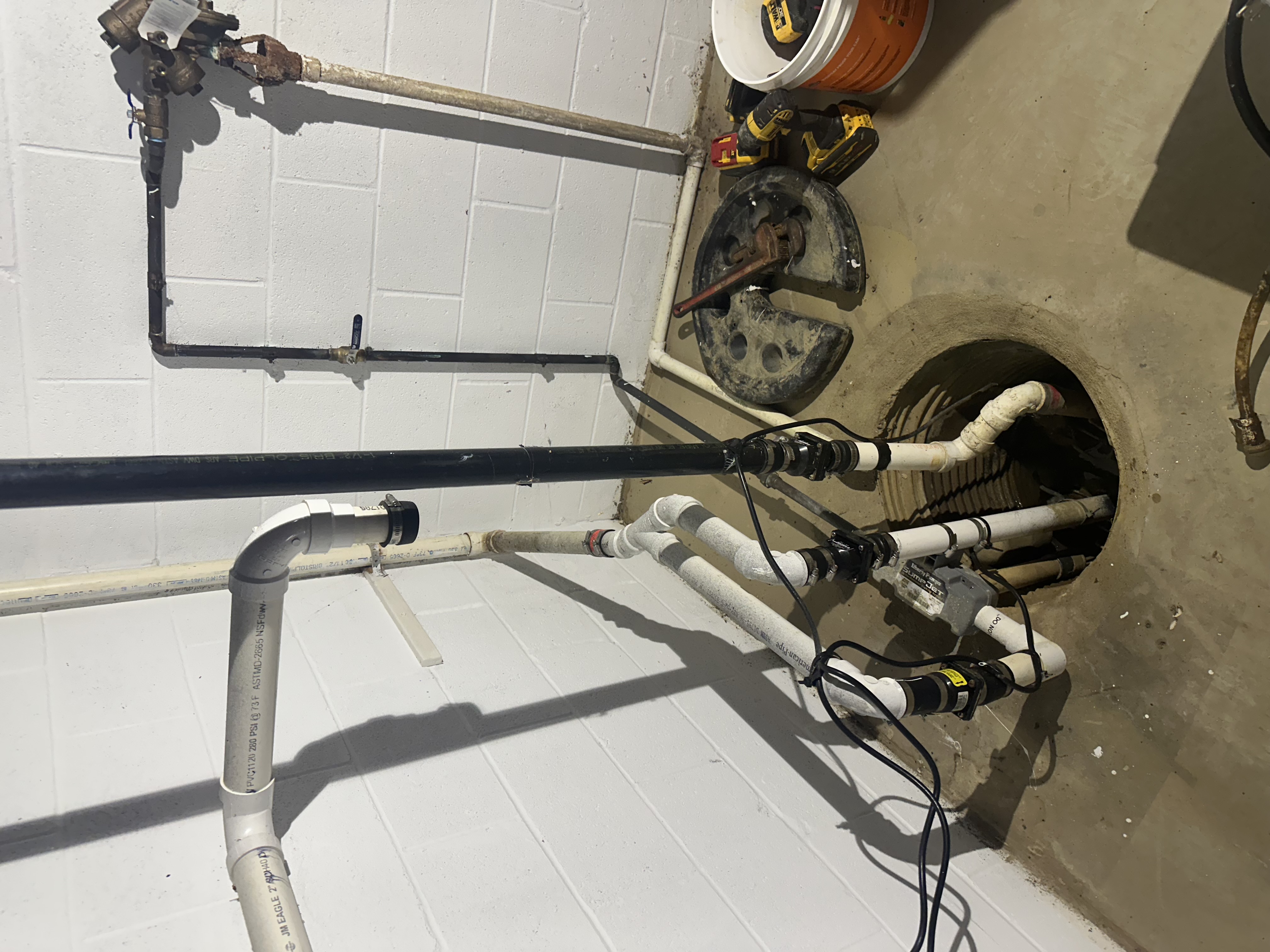
Failed or Overflowing Sump Pit
If a sump pump fails during a high-water event, the sump pit overflows and water spreads across the floor. This can appear similar to groundwater intrusion but has a specific point of origin at the sump pit location.
What Can Homeowners Safely Do?
- Note where the water first appears: drain opening, cracks, or uniformly across the floor.
- Note whether the water has a sewage odor.
- Note whether the event corresponds with rain or heavy plumbing use.
- Move belongings away from the water and avoid contact with water that may be sewage.
- Check whether the sump pump is running and the pit is not overflowing.
Do not walk through water that may be sewage. Raw sewage contains bacteria and pathogens. Use boots or keep clear until the source is confirmed.
When Is This an Emergency?
- Sewage is actively backing up into the basement.
- Water is rising and electrical equipment or panels are at risk.
- A pipe beneath the slab is suspected of leaking and water pressure is high.
- The situation is worsening rapidly.
How Gray's Precision Plumbing Diagnoses Basement Floor Water
When water appears through the floor drain or near drains, an inspection of the main sewer line with a camera can quickly identify a blockage, root intrusion, or structural failure. For recurring sewer backup through the floor drain, a plumber can also evaluate whether a backflow preventer on the floor drain would reduce or eliminate future events.
Northeast Ohio Considerations
Heavy spring rainfall and rapid snowmelt are consistent seasonal factors in Lorain County and the surrounding area. Homes without adequate sump systems in high-water-table areas are more susceptible to groundwater intrusion during these events. Older homes may also have clay sewer lines that are more prone to root intrusion and joint separation, making sewer backup a recurring problem.
Frequently Asked Questions
Why is water coming up through my basement floor drain?
What is hydrostatic pressure and can it cause water to come up through a concrete floor?
How do I know if water in my basement is from the sewer or from groundwater?
Can a failed sump pump cause water to come up through the basement floor?
Is a backflow preventer or check valve useful for preventing basement floor drain backup?
Related Plumbing Knowledge
Related Services
Related Reading
Water Coming Up Through Your Basement Floor?
Gray's Precision Plumbing can diagnose whether it's a sewer problem and give you a clear answer on how to fix it. We serve Elyria, Lorain, Avon, and surrounding communities.
Call 440-723-8850 Send a Message