What It Is
A water heater expansion tank is a small pressurized vessel - usually 2 to 4 gallons - installed on the cold water supply line near the water heater. When water heats up, it expands. In a closed plumbing system, that expanded volume has nowhere to go, which drives up pressure throughout the system. The expansion tank absorbs that extra water volume, relieving the pressure and preventing stress on the water heater, pipes, and the T&P relief valve.
What It Does
Thermal expansion is a straightforward physical fact: a 50-gallon tank of water heated from 50 degrees to 120 degrees Fahrenheit increases in volume by roughly half a gallon. That extra volume has to go somewhere. In an open plumbing system - common in older homes - excess pressure can bleed back into the municipal supply line. But modern homes with backflow preventers or pressure-reducing valves create closed systems, meaning there is no path for pressure to escape.
The expansion tank provides that escape path. Inside the tank, a rubber bladder or diaphragm divides the vessel into two chambers. One side is pre-charged with air at a set pressure; the other connects to the water system. As water pressure rises during heating, water compresses the air cushion on the other side of the diaphragm, absorbing the volume increase. When water cools and pressure drops, the air pushes water back into the supply line.
Many building codes now require expansion tanks on new water heater installations in closed systems. If your home has a backflow preventer on the water meter or a pressure-reducing valve, you likely have a closed system and need an expansion tank.
Where It Is Located
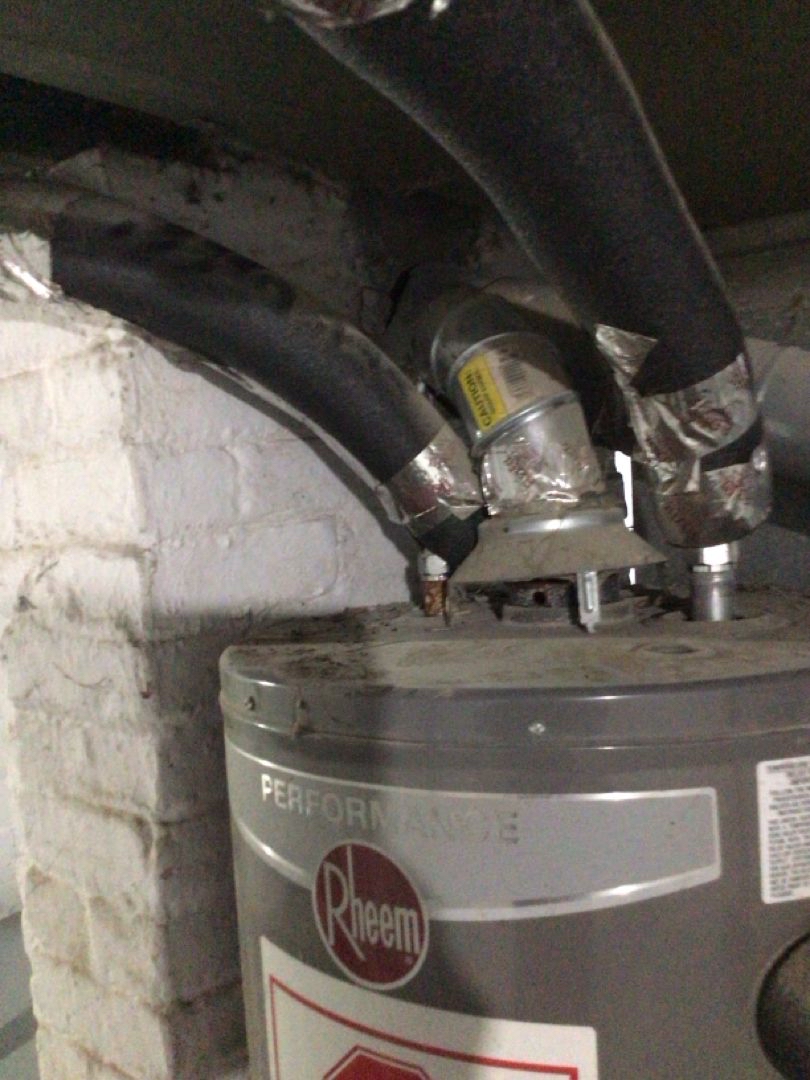
The expansion tank mounts on the cold water supply pipe near the top of the water heater, typically with a tee fitting. It usually hangs off the supply line horizontally or vertically and is visible as a small gray or blue steel cylinder, roughly the size of a football to a basketball depending on capacity. It should be installed on the cold side, before the cold water inlet to the heater.
How It Works
The pre-charged air pressure in the expansion tank is set to match the incoming water pressure of the home - typically 40 to 80 psi. When thermal expansion raises the water pressure above that baseline, water enters the tank and compresses the air cushion. No electricity or moving parts are involved; it is a purely passive pressure management device. The pre-charge pressure can be checked and adjusted with a standard tire gauge on the Schrader valve on the tank body.
Common Problems or Signs of Failure
- T&P relief valve dripping or activating repeatedly - this is a common sign the expansion tank is waterlogged or not present
- Water hammer or banging pipes when the water heater cycles - can indicate pressure spikes the tank is no longer dampening
- Expansion tank feels completely heavy or solid when tapped - the bladder has failed and the tank is waterlogged (full of water with no air cushion left)
- Expansion tank feels completely light with no water resistance - may indicate a bladder rupture or the tank was never properly charged
- Visible corrosion or leaking at the tank body or fitting connection
Can a Homeowner Check It?
You can do a basic check by pressing on the Schrader valve on the air side of the tank. If water comes out instead of air, the bladder has failed. You can also tap the tank - a functioning tank will have a hollow sound on the air side and a dull sound on the water side. A completely solid thud throughout means it is waterlogged.
- Check the T&P valve discharge pipe - if it drips regularly, suspect a failed or missing expansion tank
- Tap the expansion tank body - a failed bladder gives a uniformly heavy, solid sound
- Press the Schrader valve - air should come out, not water
- Look for mineral staining, corrosion, or drips at the tank connection fitting
When to Call a Plumber
Call if your T&P relief valve is dripping without an obvious cause, if you suspect your expansion tank has failed, or if your home has a closed plumbing system and no expansion tank is installed. A plumber can test the system pressure, verify whether a closed system is present, and size and install the correct expansion tank. Pre-charge pressure must match your home's supply pressure, so sizing is not purely guesswork.
Related Plumbing Problems
Related Plumbing Terms
Related Gray's Services
Have a Plumbing Question? We Can Help.
Gray's Precision Plumbing serves Northeast Ohio. Call or text for a straight answer on what's wrong and how to fix it.
Call 440-723-8850 Send a Message