What It Is
A dip tube is a plastic pipe inside a tank water heater that threads into the cold water inlet fitting at the top of the tank and extends down nearly to the tank bottom. Its purpose is to direct incoming cold water to the bottom of the tank - where the heat source is - instead of allowing it to mix with the hot water at the top that feeds the hot water outlet. Without the dip tube, cold incoming water would immediately dilute the hot water supply, drastically reducing the useful hot water capacity of the tank.
What It Does
Hot water rises and cold water sinks - this is a basic principle of thermal stratification. A tank water heater relies on this stratification to function efficiently. Hot water accumulates at the top of the tank and exits through the hot water outlet. Cold water enters through the dip tube, goes to the bottom, gets heated, and rises.
The dip tube maintains this stratification by keeping the cold water inlet at the bottom of the tank rather than at the top where the tube physically connects. If the dip tube breaks, cracks, or falls off entirely, cold water enters at the top and immediately mixes with the hot water that should be going to the hot water outlets. The result is water that never gets fully hot or runs out much faster than expected.
Dip tube failure was a significant widespread issue in the 1990s, when a specific type of plastic used in dip tubes (polypropylene) was found to degrade and disintegrate at water heater temperatures. Homeowners in that era sometimes noticed small white plastic particles coming out of their faucets and showerheads. Replacement dip tubes are now made from more durable cross-linked polyethylene or other heat-resistant materials.
Where It Is Located
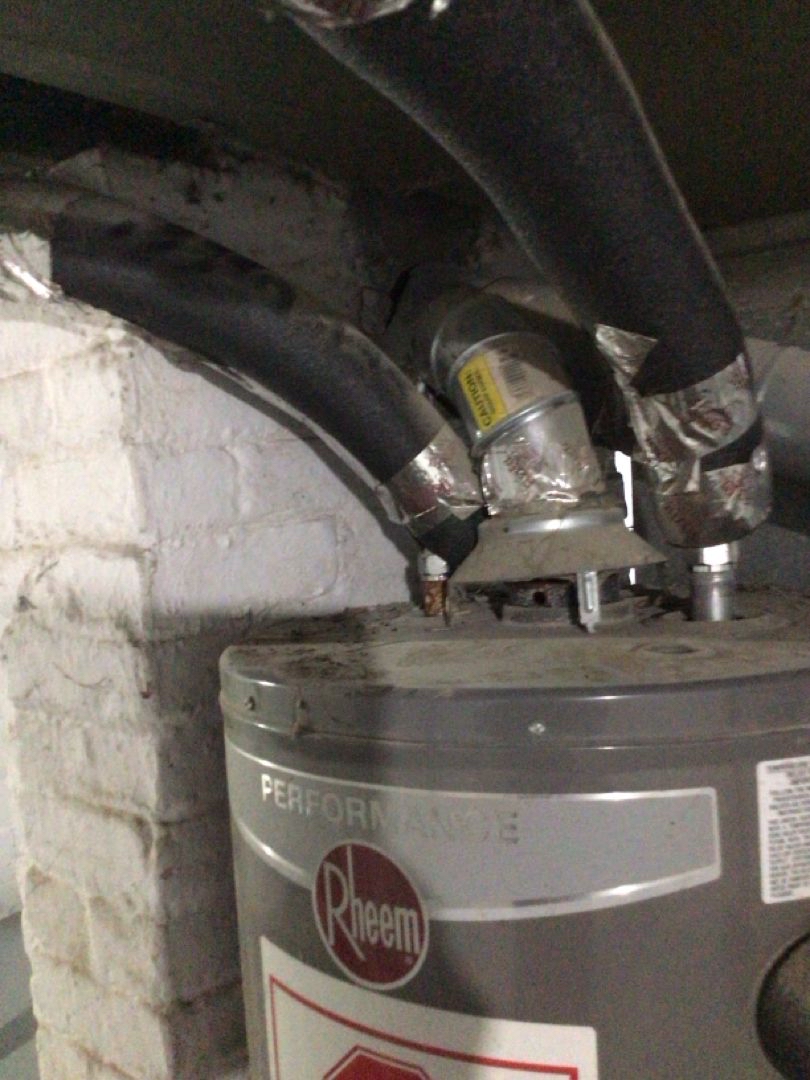
The dip tube is not visible from outside the water heater - it is entirely inside the tank. It threads into the cold water inlet port at the top of the unit (marked "C" or "Cold" on most heaters). The tube runs down through the full height of the tank interior, with the open end positioned near the tank bottom. Accessing it requires removing the cold water inlet fitting, which cannot be done without first shutting off the water supply and relieving pressure.
How It Works
The dip tube is a passive component with no moving parts. Cold water flows in through the inlet, down through the tube, and exits at the bottom of the tank into the cooler water zone near the burner or lower heating element. There it is heated and rises via thermal convection to the top of the tank, where it exits through the hot water outlet when a fixture is opened. The dip tube simply provides a physical channel that separates the cold water inlet path from the hot water accumulation zone.
Common Problems or Signs of Failure
- Hot water runs out very quickly despite an adequately sized tank - cold inlet water is mixing with hot at the top of the tank
- Water is consistently lukewarm rather than fully hot - the dip tube has broken and cold water is short-circuiting to the hot outlet
- Small white or gray plastic particles coming from hot water faucets or showerheads - a disintegrating dip tube
- Shower temperature changes quickly from hot to lukewarm after a small draw - stratification has been disrupted
Can a Homeowner Check It?
You cannot see the dip tube without disassembling the cold water inlet. However, you can observe the symptoms. If your water heater runs out of hot water faster than it should for its size, and you have confirmed the heating element or burner is working, a failed dip tube is a reasonable suspect - especially if the heater is more than 10 years old.
- Note whether hot water exhausts much faster than the tank capacity would suggest
- Check the water heater age - if over 10 years, the dip tube may have degraded
- Look for small plastic particles in aerator screens on faucets or showerhead filters
- Confirm the heating element or burner is functioning before blaming the dip tube
When to Call a Plumber
Call if your tank water heater runs out of hot water suspiciously fast and other causes have been ruled out. Replacing a dip tube involves shutting off the water supply, draining some tank pressure, removing the cold inlet fitting, and inserting a new tube. A plumber can do this during a routine service call and check the condition of the anode rod and tank while access is available.
Related Plumbing Problems
Related Plumbing Terms
Related Gray's Services
Have a Plumbing Question? We Can Help.
Gray's Precision Plumbing serves Northeast Ohio. Call or text for a straight answer on what's wrong and how to fix it.
Call 440-723-8850 Send a Message